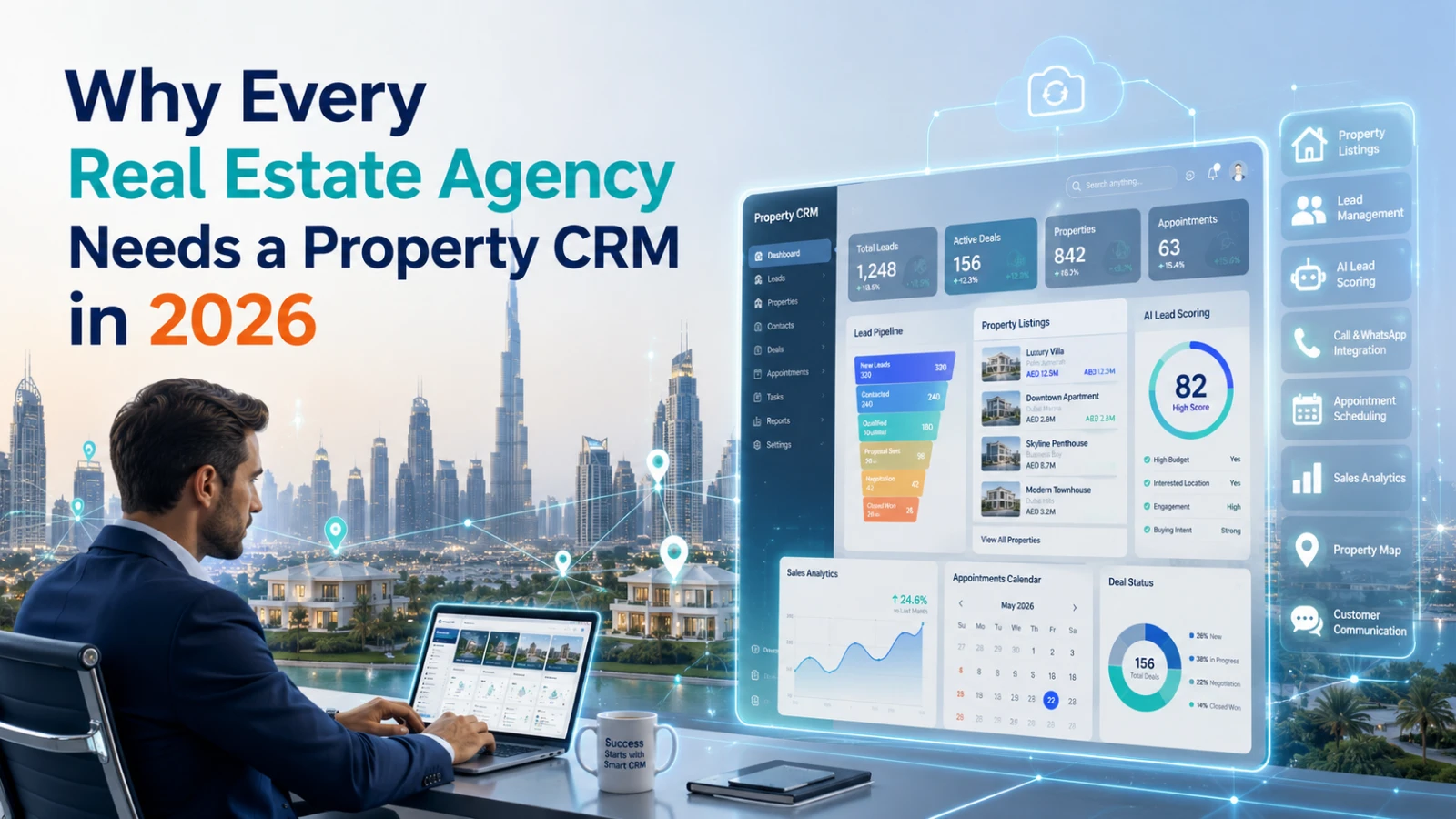
Real estate has changed faster in the last few years than most agencies expected. Buyers now message on WhatsApp, browse portals at midnight, and expect instant replies. Spreadsheets and shared inboxes simply cannot keep up anymore. In 2026, a property CRM is no longer optional for serious agencies.
Leads Come From Everywhere Now
A single buyer might find you through three different channels. They see a portal listing, click an Instagram ad, then send a WhatsApp message. Without a CRM, those touchpoints look like three separate leads. Agents waste time, duplicate effort, and sometimes contact the same person twice.
A property CRM merges every channel into one lead record. Agents see the full journey before they even pick up the phone.
Response Speed Decides Who Wins the Deal
Property buyers rarely wait patiently for a callback. They message several agencies at once and go with whoever answers first. Slow follow-up doesn’t just delay a deal — it loses it entirely.
A CRM automates the first response within seconds. It also routes each lead to the right agent automatically. Platforms like MyDesk CRM handle this routing without any manual assignment.
Your Pipeline Needs to Be Visible
Most agency owners cannot answer basic questions from a spreadsheet. How many deals are closing this month? Which agent is falling behind? Which portal actually generates buyers, not just clicks?
A property CRM answers all of this in real time. Managers see every deal stage, agent activity, and lead source clearly. Better visibility means better decisions about staffing and marketing spend.
Follow-Ups Can’t Depend on Memory
Most property leads aren’t ready to buy immediately. They browse for weeks or months before making a decision. Agents relying on memory or sticky notes lose these leads quietly.
A CRM automates follow-up sequences across email and WhatsApp. Cold leads stay warm without any daily effort from your team. When they’re finally ready, your agency is the one they remember.
Compliance and Records Matter More Than Ever
UAE real estate involves strict documentation and regulatory requirements. Contracts, listings, client details, and communication histories all need proper records. Scattered WhatsApp chats and personal inboxes create real compliance risk.
A property CRM stores every conversation and document in one system. Handovers become simple when an agent leaves the company.
Agent Turnover Shouldn’t Cost You Clients
Real estate teams change often, and departing agents take knowledge with them. If client relationships live in personal phones, that history disappears. A CRM keeps every lead, note, and conversation with the agency.
New agents pick up where the last one stopped. Clients never feel the transition at all.
What to Look for in a Property CRM
Not every CRM suits real estate work. Look for these features specifically:
- Portal integration for automatic listing syndication
- WhatsApp Business API for two-way client messaging
- Automated lead routing and follow-up sequences
- Deal pipeline tracking built for property sales
- Reporting on agent performance and lead sources
- Document storage for contracts and compliance records
Generic sales CRMs often miss property-specific needs entirely. Choose a platform built for real estate from the start.
Dubai Land Department or RERA guidance on brokerage record-keeping requirements
The Cost of Waiting
Agencies without a CRM aren’t standing still — they’re falling behind. Competitors respond faster, follow up more consistently, and close more deals. Every missed lead represents marketing spend that produced nothing.
The gap widens every quarter. Agencies that adopted CRM systems early now operate at a different level entirely.
FAQ
What is a property CRM?
A property CRM is a customer management system built for real estate. It tracks leads, listings, deals, and client communication in one platform.
How is a property CRM different from a regular CRM?
Property CRMs include real estate features generic CRMs lack. These include portal syncing, listing management, and property-specific deal pipelines.
Do small real estate agencies need a CRM?
Yes. Small agencies often benefit most from automation. A CRM lets a small team compete with much larger competitors.
Can a property CRM connect to WhatsApp?
Yes. Modern property CRMs connect through the WhatsApp Business API. Every conversation logs automatically against the correct lead record.
How long does it take to set up a property CRM?
Setup usually takes days rather than months. Most time goes into importing existing leads and training your agents.
Will a CRM help with regulatory compliance?
Yes. A CRM centralizes contracts, client records, and communication histories. This makes audits and documentation requirements far easier to handle.
Conclusion
Real estate in 2026 runs on speed, visibility, and consistent follow-up. Spreadsheets and shared inboxes cannot deliver any of these reliably. A property CRM turns scattered activity into a repeatable sales process. Agencies that adopt one now will simply close more deals than those that don’t.