CRM Software for Property Management & Sales
Running a property business in the UAE means juggling a lot at once: portal enquiries, WhatsApp chats, viewings, off-plan launches, tenant renewals, landlord updates, and a sales pipeline that moves fast. When all of that lives in spreadsheets, phone contacts and scattered chat threads, leads get lost and follow-ups get missed.
This is where CRM software for property management and sales comes in. In this guide, we explain what a property CRM does, which features matter most for UAE agencies, and how to choose the right one for your team.
What Is CRM Software for Property Management and Sales?
A CRM (Customer Relationship Management) system is a central platform where your team stores contacts, tracks every conversation, and manages deals from first enquiry to closing.
A property CRM is built for real estate workflows. Instead of generic “deals” and “contacts”, it understands listings, units, buyers, tenants, landlords, viewings and agents. It supports two sides of the business:
- Sales: capturing leads, qualifying buyers, matching them to properties, scheduling viewings and tracking offers through to closing.
- Property management: managing landlords and tenants, tracking lease and renewal dates, and keeping a clear record of communication.
Why UAE Property Teams Need a CRM
The UAE market is fast, competitive and heavily lead-driven. A few things make a CRM especially valuable here:
- High lead volume from many sources. Enquiries arrive from property portals, social ads, websites, calls and WhatsApp. Without one system, the same lead is often handled twice or not at all.
- Speed decides who wins. Buyers contact several agencies at once. The team that replies first usually gets the viewing.
- Off-plan and secondary sales run side by side. Each needs a different pipeline, follow-up rhythm and set of documents.
- Agent turnover is common. If leads live on an agent’s personal phone, they leave when the agent does. A CRM keeps the data with the company.
- Multiple branches and teams. Managers need one view of performance across offices, not separate reports from each.
Key Features to Look For in a Property CRM
1. Lead capture and portal integration
Every enquiry from your portals, website and ad campaigns should land in one place automatically, with the source recorded. This lets you see which channels bring real buyers rather than just clicks. If you rely on Bayut, check how the integration works and what data it passes over. See our guide on [Bayut CRM integration – internal link].
2. Pipeline and follow-up management
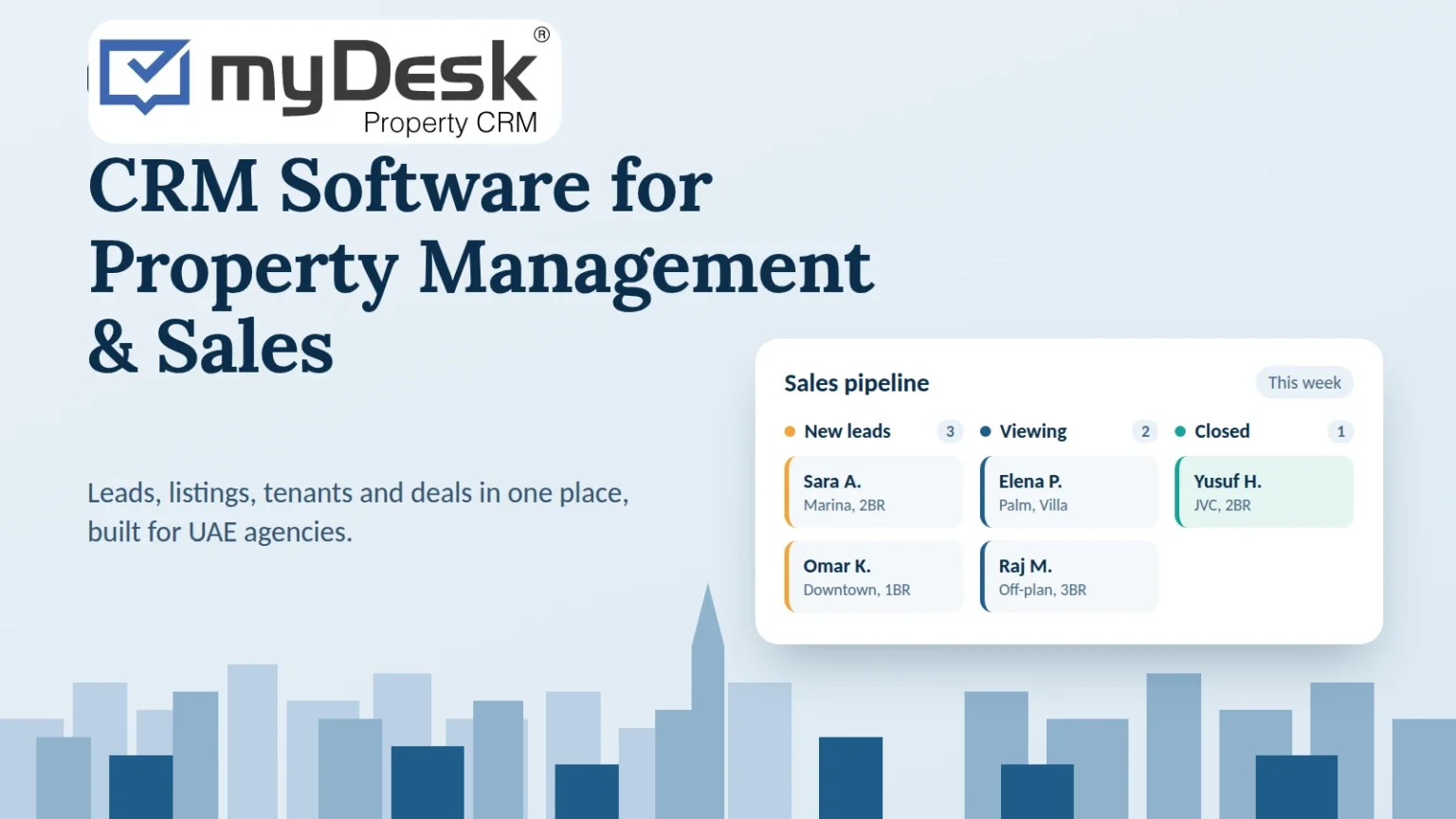
Look for a visual pipeline (new lead, contacted, viewing, offer, closed) with automatic reminders and task assignment. The goal is that no lead goes quiet because someone forgot to call back.
3. Listings and unit inventory
Your CRM should let agents match leads to available properties quickly. For developers and off-plan sellers, this includes tracking project units and availability. Read more in [off-plan lead management – internal link].
4. Landlord, tenant and renewal tracking
For the property management side, you need records of landlords, tenants, lease dates and renewals, plus reminders ahead of expiry so you can act early.
5. Calls and messaging in one place
Much of the UAE market closes over calls and WhatsApp. A CRM that logs calls and keeps conversations attached to the lead gives managers visibility and protects you when agents change. See [call tracking for real estate – internal link] and [omnichannel communication – internal link].
6. Reports and dashboards
You should be able to answer simple questions quickly: How many leads came in this week? Which agent converts best? Which source costs the most per closed deal? Good reporting turns your data into decisions.
7. Roles, permissions and multi-branch support
Agents, team leaders and managers need different levels of access. If you run more than one office, make sure the CRM supports branch-level views and reporting. See [multi-branch agencies – internal link].
Sales CRM vs Property Management CRM: What’s the Difference?
| Sales-focused CRM | Property management focus | |
|---|---|---|
| Main goal | Convert leads into closed deals | Retain landlords and tenants, manage renewals |
| Key data | Leads, buyers, viewings, offers | Landlords, tenants, leases, renewal dates |
| Typical metrics | Response time, conversion rate, deals closed | Renewal rate, occupancy, communication history |
| Main users | Sales agents, team leaders | Leasing and property management teams |
Many agencies do both. The best approach is a single CRM that covers sales and property management, so a tenant today can become a buyer tomorrow without starting a new record.
How a CRM Improves Your Sales Process
- Faster response. New leads are assigned and notified instantly, so your team replies in minutes.
- Better follow-up. Automated reminders keep warm leads from going cold.
- Clearer pipeline. Managers can see where every deal stands and where it is stuck.
- Smarter marketing spend. Source tracking shows which portals and campaigns produce real deals.
- Accountability. Every call, note and status change is recorded, which makes coaching easier.
How to Choose the Right Property CRM
Use this checklist when comparing options:
- Is it built for real estate, or is it a generic CRM you would need to customise heavily?
- Does it connect to the portals and channels you actually use?
- Does it handle calls and WhatsApp communication?
- Can it support your team size, and more than one branch if needed?
- Is it easy enough for agents to use daily? Adoption matters more than features.
- Is there local support that understands the UAE market?
- Can you try a demo with your real workflow before committing?
Common Mistakes When Adopting a CRM
- Choosing on price alone. A cheap tool that agents ignore costs more than a good one they use.
- Not training the team. Run a short onboarding and set clear rules, such as “every lead and call is logged in the CRM”.
- Importing messy data. Clean your contact lists before moving them across.
- Skipping reports. If nobody reviews the dashboards, you lose most of the value.
Get Started with MyDesk
MyDesk is a real estate CRM built for agencies in Dubai and across the UAE. It brings your leads, listings, calls, messages and team performance into one platform, so your agents spend less time on admin and more time with clients.
Book a Free Demo of MyDesk Property CRM
Frequently Asked Questions
What is CRM software for property management and sales?
It is a platform that centralises your leads, contacts, listings, tenants and deals. It helps sales teams convert enquiries into closed deals and helps property managers track landlords, tenants and renewals, all in one system.
Do real estate agencies in Dubai really need a CRM?
Yes, in most cases. Leads arrive from many channels and buyers contact several agencies at once, so fast, organised follow-up matters. A CRM also keeps client data with the company instead of on individual agents’ phones.
What features should a property CRM have?
At a minimum: lead capture from portals and your website, a sales pipeline with reminders, listing and inventory matching, call and message tracking, landlord and tenant records, reporting dashboards, and user roles. Multi-branch support is important if you have several offices.
Can a CRM integrate with Bayut and WhatsApp?
Many UAE-focused CRMs connect to major property portals such as Bayut and support WhatsApp communication. The exact integrations vary by provider, so confirm which portals and channels are supported before you commit.
How does a CRM help with off-plan sales?
It lets you run a dedicated off-plan pipeline, tag leads by project, schedule follow-ups around launches, and track which campaigns and sources bring qualified buyers.
How much does property CRM software cost?
Pricing depends on the number of users and the features included. Many providers charge per user per month. Ask for a demo and a quote based on your team size so you can compare options fairly.